In a digital ecosystem marked by mobility, hyperconnectivity and the decentralization of work environments, cybersecurity cannot be based solely on protecting the perimeter of the corporate network.
The growing adoption of hybrid models and the use of personal devices in professional environments have significantly increased the attack surface.. In this context, endpoint monitoring is not only a best practice, but an essential component of any modern cybersecurity strategy. Its objective is not only to detect threats, but to anticipate them and prevent sensitive data from leaving the organization without authorization.
Endpoint monitoring is the continuous, centralized and automated monitoring of all devices connected to a corporate network. This process involves collecting, analyzing, and correlating data about system state, user activity, network traffic, and application behavior.
Beyond a simple observation, it is an analytical capacity that allows us to identify deviations from normal patterns of use. This is especially relevant in the detection of internal threats, where apparently legitimate behavior can hide malicious or negligent activities.
Traditionally, organizations relied on firewalls and perimeter systems to protect their assets. However, this approach has become obsolete due to the proliferation of devices outside the corporate network. Endpoint monitoring responds to this evolution by adopting a distributed approach, where each device is treated as a critical element of security.
This change is aligned with models such as Zero Trust, which are based on the premise that no user or device should be considered safe by default, regardless of their location.
A data leak occurs when sensitive information is accessed, transferred, or exposed without authorization. In many cases, these leaks are not due to sophisticated external attacks, but rather to human error, misconfigurations, or malicious actions from within the organization.
Endpoints are the point where data is viewed, modified and transmitted, making them the most vulnerable place for such incidents.
An employee may unintentionally send sensitive information to an incorrect recipient, upload documents to unauthorized services, or use external devices without protection. The lack of visibility over these actions makes them difficult to detect.
Not all risks come from outside. Insiders, whether disgruntled employees or collaborators with improper access, can extract critical information using legitimate endpoints.
Malware, phishing or the exploitation of vulnerabilities can compromise an endpoint and turn it into a channel for data exfiltration. In these cases, the device acts as an intermediary without the user being aware of it.
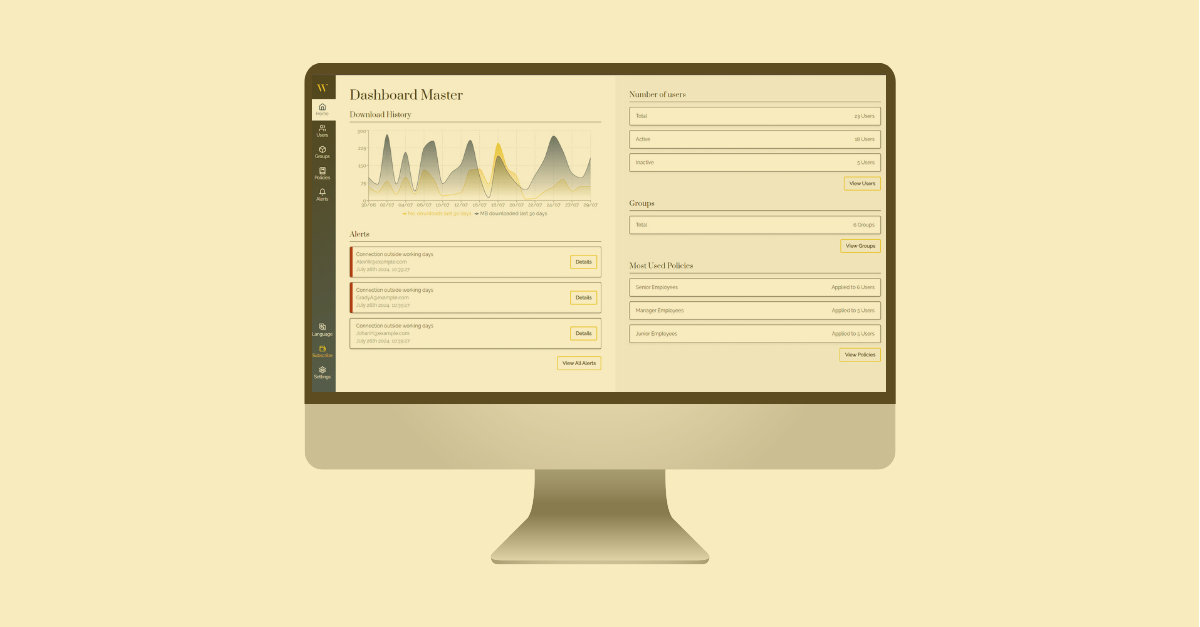
One of the main benefits of monitoring is the comprehensive visibility it provides. It allows us to know at all times which devices are active, which users are using them and what operations they perform.
This visibility not only makes it easier to detect anomalies, but it also makes it possible to establish a baseline of normal behavior. Any deviation from this reference can be analyzed as a possible risk indicator.
Advanced solutions don't just record events, but they correlate them to identify complex patterns. For example, a combination of after-hours access, massive data transfer, and use of unauthorized applications may indicate a potential leak.
AI-based behavioral analysis makes it possible to detect these situations even when there are no known attack signatures.
The ability to act in real time is key to preventing leaks. Endpoint monitoring allows you to implement automated responses, such as:
When suspicious activity is detected, the endpoint can be disconnected from the network to prevent the spread of the incident.
You can prevent sending data to unauthorized destinations or limit the use of external devices.
In case of commitment, credentials or active sessions can be deactivated immediately.
EPP platforms offer preventive protection based on signatures, heuristic analysis, and application control. Its main function is to block known threats before they affect the system.
The EDR complements PPE by providing advanced detection capabilities. It continuously analyzes endpoint activity and allows us to investigate incidents in depth, identifying the origin and extent of a possible leak.
XDR extends the EDR approach by integrating data from multiple sources, such as networks, servers, and cloud services. This allows for a more complete view of the environment and improves the ability to detect complex threats.
UEM allows you to centrally manage all devices, regardless of their type or operating system. It makes it easier to enforce security policies, distribute updates, and comply with regulations.
Not all data have the same level of sensitivity. Classifying information allows specific controls to be applied based on its critical nature. For example, financial or personal data may require additional restrictions on its use and transfer.
Data loss prevention solutions monitor the flow of information and apply rules to prevent its exposure. These policies can be adapted to different channels, such as email, cloud storage, or physical devices.
Encryption ensures that data cannot be interpreted without the appropriate key. It's especially important on mobile or portable devices that can be lost or stolen.
The use of USB sticks, external hard drives, or other devices can pose a significant risk. Monitoring makes it possible to restrict or audit their use, preventing unauthorized copying of information.
Organizations manage a wide variety of devices, operating systems and applications. This diversity complicates the implementation of uniform solutions and can lead to blind spots in monitoring.
The monitoring of user activity must be carried out in compliance with current regulations, such as the GDPR. It is necessary to balance security with privacy, establishing clear and transparent boundaries.
The amount of information generated by endpoints is enormous. Efficiently processing and analyzing this data requires advanced tools and automation capabilities.
Not all endpoints present the same level of risk. Prioritizing monitoring based on the critical nature of the device or the sensitivity of the data makes it possible to optimize resources.
Efficiency increases when monitoring tools are integrated with other security systems, such as SIEM or identity management platforms.
Technology alone is not enough. Users must be aware of the risks and adopt good practices when using devices.
Cybersecurity is a dynamic process. Organizations should regularly review their policies and tools to adapt to new threats and changes in the environment.
Endpoint monitoring is a fundamental part of preventing data leaks in today's organizations. Its ability to provide visibility, detect anomalies and respond in real time makes it an essential tool in the face of an increasingly complex threat landscape.
In a world where data is one of the most valuable assets, protecting it from the point where it is generated and used, the endpoints, is a strategic priority. Adopting a comprehensive approach that combines technology, processes and training will allow companies not only to prevent leaks, but also to strengthen their security posture and ensure business continuity.